

- Daily departures (morning or afternoon)
- Shared group service
- Bilingual guide (English/Spanish)
- Free cancellation up to 24 hours before
- Hotel pickup in Arequipa’s historic center
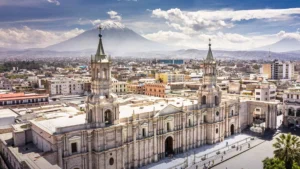
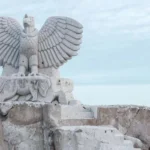
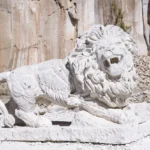
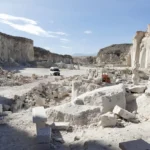
The Sillar Route shows where the white volcanic stone that earned Arequipa the name White City comes from. At the Añashuayco quarries, about 30 minutes from downtown, stonecutters still cut sillar blocks by hand with pick and chisel, and they’ve carved giant reliefs and sculptures into the quarry walls. The tour ends in the Culebrillas gorge, a narrow white-walled canyon with petroglyphs. Transport and guide are included; the quarry entrance is paid separately.
It pairs well with the Arequipa City Tour: first you see the sillar buildings, then the place the stone comes from.
Itinerary
9:00 a.m.
Pickup from your hotel in the historic center (there's also an afternoon departure at 2:00 p.m.) and a 30-minute drive to the Añashuayco ravine.
Añashuayco quarries
A walk through the working quarries:
- Stonecutters at work: see how they cut and shape sillar blocks with techniques that have barely changed in centuries
- Reliefs and sculptures carved into the quarry walls, including a condor, a puma and a miniature church façade
- Ignimbrite walls several meters high, layered in white, cream and pink
The origin of sillar
Your guide explains how the stone formed from the ash of ancient volcanic eruptions and why it became the city's building material in colonial times.
Culebrillas gorge
A short walk through a narrow sillar canyon with winding shapes and ancient petroglyphs.
~1:00 p.m.
Return to Arequipa's historic center and end of the service.
What's included
- Hotel pickup in Arequipa's historic center
- Round-trip tourist transport to the quarries
- Professional bilingual guide (English/Spanish)
Exclusions
- Sillar quarries entrance (about S/ 5–10 per person, paid in cash at the entrance)
- Meals and drinks
- Tips and personal expenses
Remember these tips to better enjoy your trip, always carry with you:
- Closed shoes with good grip: the ground is rock and volcanic sand
- Hat, sunglasses and sunscreen: the white sillar reflects a lot of sunlight
- Water and a snack
- A warm layer if you go early in the morning
- A charged camera: the carvings and the gorge are very photogenic
Frequently Asked Questions
What is sillar?
It's a white, porous volcanic rock that's easy to carve, formed when ash and pumice from ancient eruptions compacted over time. It has been used to build Arequipa's churches, mansions and convents since the 16th century, which is why the city looks white.
How much is the Sillar Route entrance?
There's a small entrance fee of about S/ 5 to 10 per person, paid in cash at the quarries. It's not included in the tour price.
Is the Sillar Route difficult?
No. There's little walking, on mostly flat but uneven ground. It's suitable for children and older travelers with proper shoes.
What other tours can I do in Arequipa?
The best known is the Colca Canyon tour to see the condors. If you have more time, the 3-day trek goes down to the bottom of the canyon.
Reviews
No reviews yet for this tour. Be the first to review!